
Dua Lipa has just released her highly anticipated sophomore album, ‘Future Nostalgia’ and Jesus Christ is it is full of timeless classics. Inspired by Gwen Stefani, Madonna, Blondie and Outcast, the album is both contemporary and nostalgic as the title suggests. Join me on this whistle-stop tour of the release as we discuss why this album is a definite earworm.
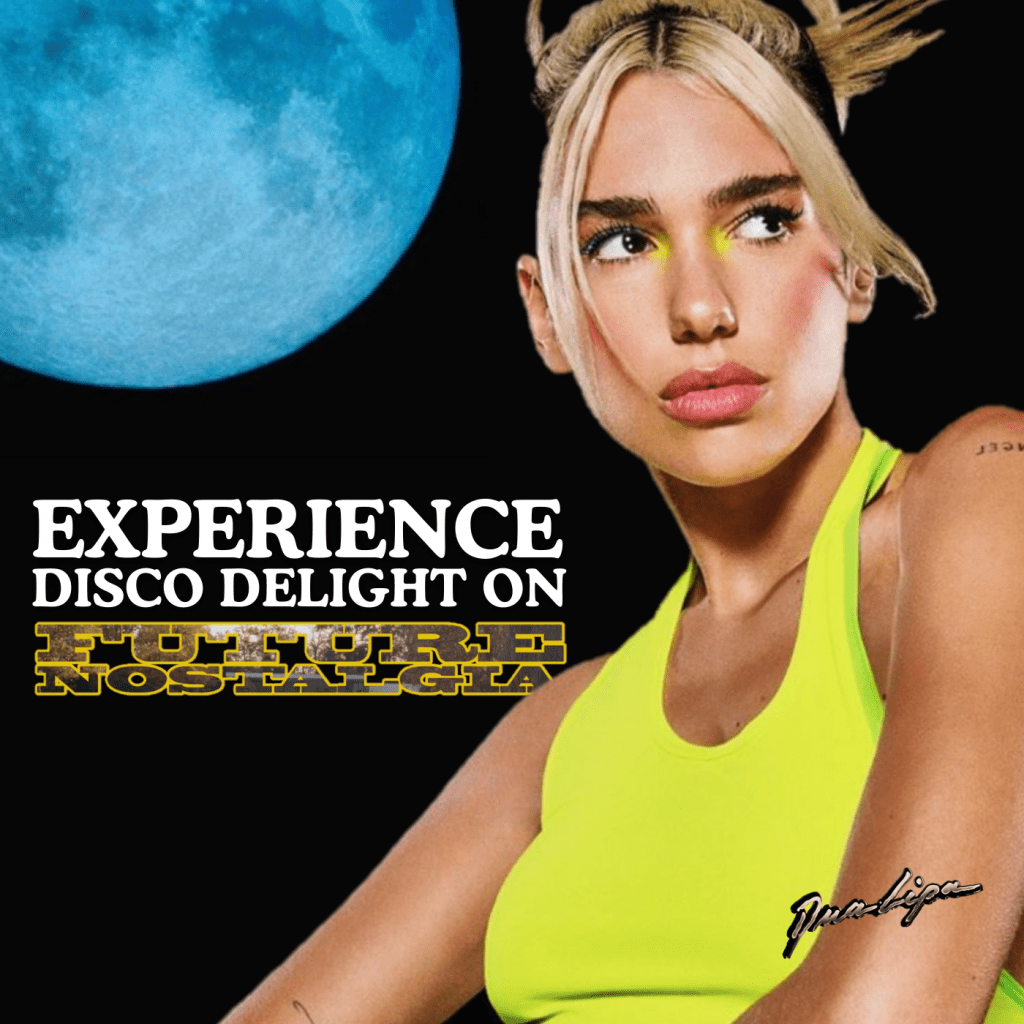
The title and opening track, Future Nostalgia, gives us a conceptual introduction to the conventions and elements that will be used throughout the rest of this body of work. Full of deep synths and spoken-word verses, we are definitely being set up for an energetic album. The track’s futuristic vibes are balanced beautifully with subtle nods to the past, serving as a prelude to what’s to come. Dua’s confident delivery here is not just about establishing a sound but setting a mood – an exhilarating declaration of what to expect from this audacious album.
Swiftly heading into the pre-decade release, Don’t Start Now opens up with an unforgiving rebellion to love, expressed through an up-tempo beat and an infectious, dancing bassline. It’s every aspect of nostalgia wrapped in a neon-colored package. What makes this track so gripping is its sense of urgency. The beat demands movement, and the lyrics reflect empowerment and growth. As Dua confidently declares she’s ‘better off without you’, the song becomes an anthem of independence and the celebration of reclaiming one’s self. The funky bassline coupled with a smooth groove reminds us why this song became an instant hit. It’s a pure feel-good, heart-thumping banger that immediately pulls you in. Shiny. Disco. 70s. Big nostalgia moment.
As if diving into a 6ft deep pool, Cool brings us an invigoratingly light synth arrangement with crisp vocals. Shedding a light on the uncontrollable aspects of love (literally us losing our cool) Dua gives us a disco groove and teases us with the heat of summer. The track maintains a breezy, playful quality, yet it’s laced with an underlying vulnerability. In the usual cheeky way, Dua’s vocal delivery is both sweet and sharp, highlighting the complexity of emotions we experience in relationships. It’s a song that feels like a summer fling, being lighthearted and carefree yet still intense in its emotions.
Physical then gives us Dua’s best attempt at producing a dedicated floor-filler track. Remaining bold and spontaneous in her decisions within the verses, this track really shows off Dua’s vocal capabilities, especially in the super-strong bridge. Verses swoop into maximalist choruses, leaving us enthused and our blood pumping. As the song progresses, the feeling of intensity builds, and you can’t help but feel swept away by the chaotic, electrifying energy that embodies this track. The minimal, almost robotic vocals in the verses contrast beautifully with the explosive, joyous chorus, making this the kind of song that gets you off your seat and straight into a dance party. The track is an intense workout or a drunken spiral out of control. There’s no middle ground, so you decide which is best.
Continuing through, Levitating emits a retro-pop feel. Combined with a funky and rubbery bassline, this playful release talks about how love can make you feel high, without being so cliché about it. Sounding like an early Spice Girls number, this sing-along is one to get the party started. The track’s upbeat tempo and catchy melody are undeniably infectious. It’s a celebration of love that doesn’t take itself too seriously, and that’s what makes it so irresistibly fun. Dua’s voice here is almost like an invitation to join the groove and embrace the euphoria of love.
In contrast, Pretty Please offers a stripped-back and acoustic vibe which underscores the detailed bassline. The minimal percussion adds a raw texture to the song here, and the confessional nature of what Dua is singing about gives the track such an intimate quality. The song seems almost whispered, as if she’s letting you in on a personal secret. Her delivery is delicate yet captivating, drawing us into her world and her feelings. There’s something very emotionally grounding about the simplicity of the track; it’s almost like we’re peping in on her most vulnerable self.
Hyped up once again, Hallucinate gives us a trance-based episode that showcases Dua at her best. It’s a dance-house track brought to life lyrically by exploring the idea of true desires. It’s the “just one more song?” at the end of a party kind of vibes. The track pulses with energy, and Dua’s ethereal vocal delivery creates a sense of detachment from reality, capturing that intoxicating feeling of losing yourself in the music. The beat builds relentlessly, giving you no choice but to surrender to the rhythm, while the lyrics explore themes of longing and desire. It’s an almost out-of-body experience as the song transports us to another world, one where the only thing that matters is the beat and the moment. Call me will.i.am.
Admitted as one of Dua’s favourite tracks on the album, Love Again interpolates the classic “Your Woman” by White Town. Dedicated to resurrecting love from a distant regret, this pro-love track introduces swing-pop to Dua’s musical discography. She also utilises this genre in a way that still manages to exist with disco elements embedded, creating an innovative sound that feels both fresh and familiar. The swing beat in the verses contrasts with the smoother pop elements in the chorus, creating an interesting dynamic that reflects the highs and lows of romantic relationships. The track oozes with both optimism and nostalgia, making it a perfect example classic sounds feeling relevant right now.
Similarly, Break My Heart samples INXS’s ‘I Need You Tonight’ and is bursting at the seams with all of Dua’s shoulda, woulda coulda’s. A love lock-down track about power and control leading to damage, this infectious record is scrambled with solid bass lines as Dua chases love on the frontline. There’s a certain urgency to this song, and Dua’s vocal performance truly captures the vulnerability of wanting love but also fearing its consequences. The beat is undeniably catchy, but it’s the emotional depth of the lyrics that gives the track an added layer. It’s the perfect dance anthem, but it’s also got that fear and surrender vibe too.
Good in Bed is about exactly what the title suggests. In her most Lily Allen-inspired track, the casual structure of this release travels alongside Dua’s off-the-cuff storytelling. She expresses how she’d rather not have feelings but cannot help the temptations. The spoken chorus is somewhat detuned and sluggish to enhance this relatable feeling, making this a great sing-a-long. It’s a candid exploration of the conflict between wanting something casual and being drawn into deeper emotions. Heightened by its flirtatious tone, this one is more than just a throwaway pop song.
Closing off, the outro anthem of Boys Will Be Boys is a baroque ballad preaching the hard truths and expectations of young women. Dua talks about harsh realities and leaves us with a genuine and heartfelt track encouraging men to take a second and self-reflect. It’s a poignant way to end the album, leaving us both with a sense of empowerment but also a call to action. The orchestral arrangement adds weight to this message, making it a powerful statement about gender inequality and the societal pressures placed on women. It’s a song that feels like a rallying cry for change, urging us all to do better and be better.
I really am in awe of this release. It’s everything we could have ever wanted on a single album. Bring back the trend of having less tracks but better-quality songs because every track on this record is worthy as a standalone release.
Something like this hasn’t been achieved since Katy Perry’s ‘Teenage Dream’ and leaves me wondering if this is Dua’s decade? That’s up to you to decide. I will say though, with now two highly acclaimed albums under her belt and a confident attempt to find a place for disco in the charts right now, Dua Lipa is pulling all the right strings to make a moment.
 Glerbie