
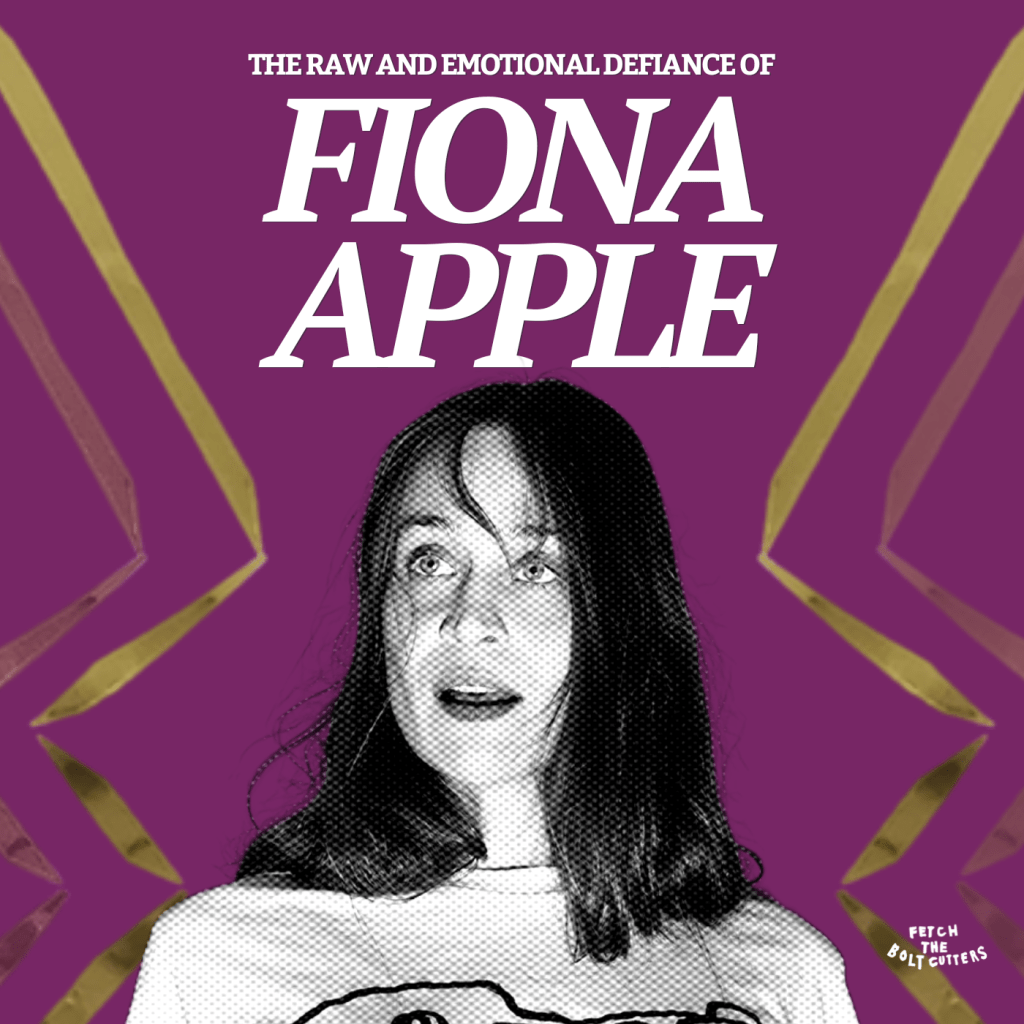
Fiona Apple’s ‘Fetch the Bolt Cutters’ is a uniquely special album that feels like an emotional tidal wave. It’s special because, after an eight-year hiatus, she has returned with such a powerful release, which has since soared to the second-highest rated album of all time on Metacritic. Embraced by critics and listeners alike, the album has found its perfect place in the middle of a pandemic, offering a soundtrack for introspection, emotional release, and a close listen. Unlike anything I’ve heard before, the DIY percussion (crafted from everything from pots and pans to seedpods and even bones) create a rhythmic drive throughout the record that feels as organic as it is revolutionary. It’s no wonder this album has earned universal acclaim. Let’s unlock the chains…
Right from the opening track, Apple sets the stage with the raw I Want You to Love Me. The energy is almost primal, with rhythmic shifts throughout the song that feel so organic and almost improvised. Her voice cracks and strains as she desperately croons, ‘by that time, I hope that youuuuuuuuuuuu love me’. The extended “youuuuuu” being drawn out infuses the exhaustion that’s so noticeable here, as she grasps for breath, holding onto her little hope. Topped with elements of Buddhism and nihilism (‘time is elastic’ and ‘particles disband and disperse’), it’s a song about big, cosmic questions on top of big percussive beats. It has a ramshackle, unpolished quality, which we’ll come to know more of throughout the album, but from this point the messy production creates a clear correlation of the messy processes of living, healing and loving.
Fast forward to Shameika, and it’s an electrifying burst of energy. The frantic, fast-tempo piano mirrors panic and youthful angst at a formative time for Apple. She is channeling her frustrations with a wandering piano full of kinetic energy. As if the production is running away with the wind, Apple reflects on the power of memory, singing about middle school bullies and the one person who saw the true Apple – ‘Shameika said I had potential’. The song is grounded in raw, imperfect humanity, shown again through its percussive elements and her battle between carrying bullies’ messages into adulthood. The realness is so real that you can literally hear the saliva in her mouth.
Given the album title, Fetch the Bolt Cutters is a bold declaration of liberation. The storytelling energy is sincere here, with an improvised tone that plays off an uneven, slanting rhyme scheme, with a double bass carrying most of the song. Apple’s voice enters with that familiar rawness, clashing against the backing vocals that seem out of time, as if she’s breaking free from something that’s held her in place for far too long. The percussion this time is understated but still captivating, as she slams and pats with subdued energy. Carrying the weight, her confrontational lyrics ‘I’m ashamed of what it did to me, what I let get done, it stole my fun, it stole my fun’ reflect on how her past has constrained her, with music acting as a form of spiritual healing that didn’t come easily at first. The chorus exists simply as a repeated plea: ‘fetch the bolt cutters, I’ve been in here too long’ to symbolise her break from her metaphorical prison, and her repeated ‘I need to run up that hill, I will, I will, I will’ toward the outro gives us hope that Apple is ready for a new perspective on life. It’s a song of strength, a cry for freedom, and an affirmation that she’s ready for a new chapter.
An unapologetic feminist anthem, Under the Table exists to dismantle the patriarchy with both humour and severity. Apple weaves a nuanced narratives about a tense and heightened dinner situation where she’s being pushed into submission. The ‘kick me under the table all you want, I won’t shut up’ line is a defiant refusal to be silenced, no matter the cost, and the jaunty organs and driving percussion create an unnerving, swelling energy that anchors this defiant-but-growing-with-confidence vibe. By the time the chorus hits, Apple’s voice transforms from quiet defiance to bold and outright rage: ‘don’t you shush me’. The track subverts traditional power dynamics, flipping the script on gender roles with choices like ‘cookie’ acting as a pointed jab at the misogynistic language often used by men in arguments… ‘darling.’
Establishing this defiant energy even more, there’s a marching band feel to Relay, as its urgent rhythm propels the song forward with fierce momentum. Apple sings, conjuring the image of abuse as an Olympic sport, ‘evil is a relay sport, when the one you burn turns to pass the torch’, to demonstrate the never-ending cycle of abuse. There’s a somewhat sadistic energy beneath the track that fuels her sharp, direct vocals. The commentary on the societal challenges that refuse to break (specifically those in power) are inspired by one man: Brett Kavanaugh. As we end, spiraling whistle tones overlay her vocals, adding to the carnival-like energy and pushing us to confront the discomfort of these cycles.
A strange, exciting, captivating, and off-puttingly “off” track, largely due to its jaunty chord progressions and booming percussion, Rack of His is about the emotional imbalance that comes with giving your all in a relationship, only to be met with indifference. Apple sings, offering heartfelt gifts (‘I gave you pictures and cards on non-holidays’) but receives nothing in return. She compares herself to a loyal dog, following her lover ‘from room to room with no attention’, but despite the emotional neglect, the song holds a cheeky quality. This is specifically shown through the line ‘check out that rack of his’, where she flips the objectifying phrase over to the men in the room. How do you like it, men? It’s a clever commentary on the absurdity of societal standards, addressed over bouncy percussive elements and very interesting mellotron chords.
Newspaper continues the album’s dissonance with a haunting intensity. It explores the isolation and connection that pain can bring, especially when it’s made public. The newspaper here serves as a metaphor for how Apple’s private suffering is exposed to the world. Yet, even in that exposure, there’s a sense of isolation: ‘I too used to want him to be proud of me’. The conflictingly complex lyrics delve into the manipulation and deceit that often accompany abusive relationships, particularly the ways in which abusers try to keep their victims isolated and conversation-free from others. The instrumental is less intrusive, allowing Apple’s gorgeous harmonies to shine through, despite an overall unsettling quality, as if we’re listening in on her personal hell.
Sparking up with a smoldering, jazzy track with an alt-rock twist, Ladies is a slow-tempo groove that holds a lot of restrained tension. With jagged drum work, Apple addresses women who have been victims of cheating, shifting the narrative to blame the men, not women. She challenges the competition between women – ‘the view and the figure and the form and the revolving door that keeps turning out more and more good women like you’, but the song has a lighthearted quality too, as if she’s educating us listening. Ultimately, the song addresses the difficulty of reaching other women stuck in toxic situations, acknowledging that sometimes, no matter how much you try, you can’t always reach everyone.
Rightfully weighty, Heavy Balloon confronts the suffocating feelings of depression. It feels like being buried under a heavy, unrelenting burden. Apple uses a gardening metaphor to convey a sense of growth: ‘I spread like strawberries, I climb like peas and beans’, with the idea of taking over the garden one day. Hinting at growth, Apple shows off organic percussion elements again alongside harrowing vocals that create an atmosphere both grounded and intensely emotional. The track crescendos and crashes out, drums adding a lead-like quality as they’re pounded, and every layer of the track builds on the heavy emotional state that depression can bring. It’s a track that superbly masks the feelings of being low.
Introducing space-like themes, Cosmonauts sees Apple singing about the emotional tether that binds two people together. Space imagery of cosmonauts drifting through space suggests a relationship that’s both distant and inescapable as if she can’t escape her own emotional gravity. A rocky float, Apple reflects on the balance of co-dependency, alluding to the idea that you cannot let your self-worth be entirely defined by another person. As she sings, ‘make light of all the heavier, cause you and I will be like a couple of cosmonauts’, it’s clear she’s trying to navigate these complexities, and the vacuum of space is the perfect backdrop for ideas of leaning maybe a little too much.
Trigger warning for this one, as For Her has Apple digging deep into her past, delivering a raw, unflinching narrative of overcoming rape. Her multi-tracked, haunting voice resembles a choir-like quality and adds to the haunting experience of this track, reflecting both the collective pain of survivors and the solitary nature of her own experience. The tempo feels slow and deliberate as it dredges through itself, carrying the beat a millisecond behind, mirroring the emotional weight she carries. Her blunt, direct lyrics such as ‘good morning, you raped me in the same bed that your daughter was born in’ are totally difficult to digest but totally necessary for the track. It feels like an uncompromised shield, offering protection to others from the Hollywood “creeps” that enable such behavior. Apple’s willingness to confront this experience in such a contained way makes it the most powerful track on the album.
Feeling disorienting and introspective, Drum Set emits a truly DIY aesthetic with a seemingly missing drum structure. It reflects on loss and rejection, with Apple repeating, ‘why’d you take it all away?’ as she slurs, clearly filled with disbelief about the situation. The alcohol-soaked blur of the production mirrors the confusion and numbness of dealing with deep emotional pain, and the track leaves a lingering feeling of emotional wreckage within all its rawness. Goes deep.
The final track of the album, On I Go, feels more like a chant or meditation on the mundane than a song itself. The rhythm is repetitive, and there’s an unsettling randomness to the song that perhaps is inspired from Apple’s time in prison. The deliberate, ominous, and dissonant atmosphere depicts the feeling of being trapped in a cycle that never ends, and her vocal ability shifts between monotonous and reflective in the lyrics ‘on I go, not ward or away, up until now, it was day, next day’, which really give off a reluctant acceptance to this banishing end.
To put it directly as Apple would do, this album is far from perfect, but that’s exactly what makes it so compelling. The intentional fractures and rawness throughout the album add such a human touch, where each unfinished moment and each scattered, unpolished beat is a testament to the pain Fiona Apple has endured and is still working through to this day. Each track could spiral for centuries, and I suppose that’s what makes it feel so timeless already.
For those who’ve walked through similar struggles, there’s a nourishing sense of shared experience on this LP. Rage, anger, and eventual understanding are all wrapped up in Apple’s powerful vulnerability and recognition. It’s undeniably bold, undeniably imperfect, and pretty nuts. It’s a healing journey, and if you don’t like the songs because they don’t sound like ‘songs,’ that’s probably the whole point.
 Glerbie