
FKA Twigs just released her third studio album, EUSEXUA, and boy, are we in for a ride. It’s a bold exploration of identity, desire, and the transformative power of dance music. But what the hell does it mean? In a recent TikTok, Twigs mentioned that the album is “for the girls who find their true selves under a hard metal silver stiletto on the damp rave floor.” And say no more. You’ve transported me. I’m there.
It’s a practice, a flow state, the pinnacle of human experience. The very concept floods your listening experience, as we’re submerged into a truly mysterious world of synths, vocoders, and techno influence. So, join me as we explore Twigs’ third studio album and the experimental, glitched-out, alien-like masterpiece it truly is.
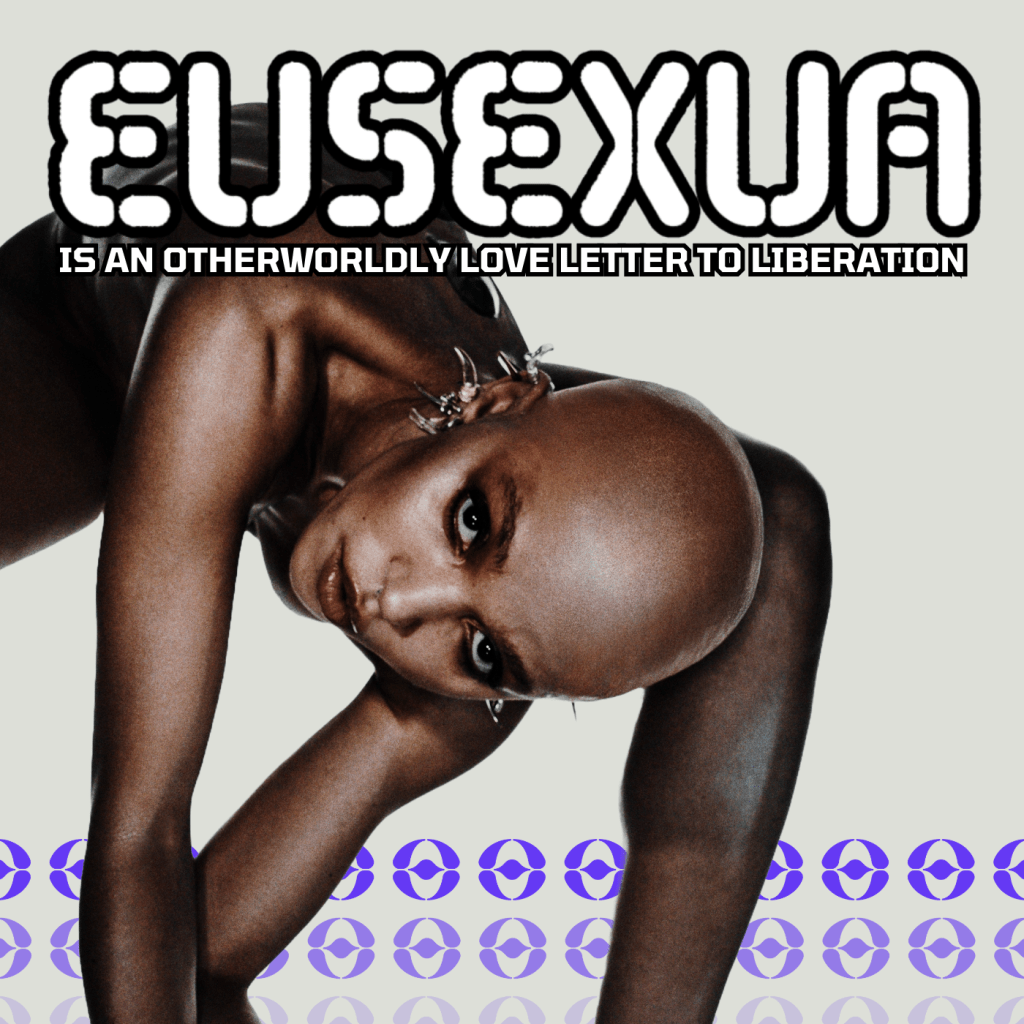
The album opens with the title track, EUSEXUA, anchored by a relentless four-on-the-floor beat. Twigs’ lyrics “‘words cannot describe, baby, this feeling inside’ really encapsulate the expressionist nature of the album’s theme. The production feels like a pop song transported from the year 2305, blending artful thoughts with otherworldly soundscapes. Marking Twigs’ “closest moment to pop” yet, she still maintains her avant-garde aura, dissolving each vocal into the abyss by the outro (‘do you feel alone? you’re not alone’) and exploring feelings beyond love as we delve deeper into this sonic realm. What an opener.
Following this, Girl Feels Good serves as a contemporary commentary on toxic masculinity, set against a backdrop reminiscent of Madonna’s ‘Ray of Light’. The track juxtaposes a world filled with insecurity, misogyny, and violence with empowering lyrics like ‘if a girl feels good, you know she feels pretty’. It’s got a powerful stance on women providing life, teaching lessons, and making the world turn, while Twigs takes on a more confident tone than ever.
Standing out as the album’s most club-worthy track, Perfect Stranger echoes the synth pulses of Kylie Minogue’s smash ‘Can’t Get You Out of My Head’ and definitely leans into a Y2K aesthetic, a theme that resurfaces later in the album. With alien-like concepts, vocal chops, and hallucinogenic qualities, the song explores the thrill of connecting with someone unknown: ‘I don’t know the name of the town you’re from […] I don’t know, and I don’t care’. Twigs embraces risk both vocally and in the production here, with the final 30-seconds deconstructing into that 3am dance haze. It’s a delirious ride that comes to a sharp close, leaving us asking, “who is this diva?”.
In a production tour de force, Drums of Death delivers hard-hitting and unapologetic – you guessed it – drums. Partnering with longtime collaborator Koreless, Twigs creates a visceral and experimental sound on this one. It’s production on steroids. It’s like nothing else I’ve heard. The track captures the glitches of life, embodying a complex experience that explodes with themes of identity and desire alongside motifs of performance art. Poetic lyrics like ‘tear your clothes, body torn, shed your skin’ and ‘hello, it’s your life, and you’re my main character’ invite us to shape our own narratives, resonating with the overarching themes of liberation and the idea of eusexua as a truly out-of-body experience.
Feeling overwhelmed? Good. Let’s take it up a notch. Room of Fools presents itself as a dissonant landscape where melodies and production intentionally clash. The keys are mismatched, the pacing is off, and the whole vibe feels uncertain. Lyrics express anger against an oddly optimistic production, ultimately creating a dance track that acknowledges the downfalls of humanity. Uncomfortably, Twigs grunts, ‘we’re open wounds just bleeding out the pressure’, reinforcing the emotional release found within the track’s otherworldly instrumentation. It’s an underground high.
In a downtempo shift, Sticky offers an intimate glimpse into Twigs’ complexities, with minimalistic production designed solely just to build atmosphere. Addressing ‘overcomplicated moments’ and ‘sticky situations’, Twigs confronts her insecurities and anxieties alongside glitches that mimic demonic-like qualities. Drawing parallels to Marian Hill’s vocal editing, especially in the chorus, the song evolves into the ownership of a malfunctioning robot, symbolising a complete and utter loss of identity by the outro. She takes a leap of faith into her healing journey on this one, leaving a previous version of self behind. Deep shit.
Embarking on this journey to recovery, Keep It, Hold It channels experimental vibes while delivering a lesson in cherishing moments. The track encourages overcoming fears, anxieties, and body dysmorphia, acknowledging that ‘a million people gotta feel this way’ before reaching their end goal. She preaches, ‘what have I got to do’, as if relying on us for comfort and encouragement. With introspective production and imperial Japanese motifs, this stands as the album’s most “human” track. Twigs is speaking to us in a 1:1 fashion.
Embracing a youthful and playful energy, Childlike Things pays homage to J-pop and features none other than North West (yes, the daughter). Twigs really switches up the tempo here, and the placement of this track is so deliberate, offering a break from the ‘overcomplicated moments’ of healing prior. In a fast-paced, synthetic style, this track sees North rapping in Japanese while Twigs blends futuristic elements with current cultural influences. It exuuuuuudes catchiness (the chorus literally being ‘dun dun dun dun-dun dun dun dun’), and the simplicity of the track is actually its unique charm.
Contrastingly, Striptease delves back into ethereal territory with an 808-driven production that oscillates between vulnerability and sexuality. Lyrics like ‘opening me feels like a striptease’ are intertwined with lingerie imagery and are set against a clinical beat reminiscent of a heart monitor. It has a cold, metallic, warehouse feel despite its intimate lyrics. Twigs manages to balance pain and vulnerability on this track (‘I’m borderline, it’s getting late, I feel alive’), before a dramatic shift into an uptempo, drum-and-bass-inspired outro.
Exploring themes of submission and sacrifice, 24hr Dog sees Twigs portraying a dog-like mentality. The complete consumption of an individual by their partner is underscored by technological and atmospheric production, while the willingness to give up one’s identity and adapt to another’s needs carries the weight of the lyrics on this one. One that requires a sharp ear.
We then reach what I would say is the album’s climax. Wanderlust is truly a ballad of an outro. An ode to the endless voyage of self-discovery. Twigs transcends reality, asking her lover to find her when she is ‘lost in the wanderlust’. Shedding the club aesthetics here, we get raw vocals accompanied by acoustic guitars, creating a real and grounded spiritual ambiance. Twigs sings in a lower register, inviting us into this awakening: ‘if I don’t wake up Monday morning, I’ll make it up to you, babe’.
As drum patterns slowly emerge throughout the latter half, Twigs explores eusexua in a new way here – a continued, maintained state of being: “you’ve got one life to live, do it freely.” The drums then take over and Twigs repeats, “I’ll be in my head if you need me,” mirroring the constant noise and overwhelming thoughts we all could use some help with once in a while.
Look, we don’t get the perfect resolution we might have hoped for, but I think that’s the point. Eusexua is a testament to the discomfort, the harsh reality moments, and the transcendence of it all. This release truly showcases FKA Twigs’ ability to intertwine experimental sounds, profound lyrics, and immersive experiences. This album challenges, drives and transcends conventional pop boundaries, and I’m super pleased she’s finally getting the recognition she so deserves. Enjoyed best listening on a dark evening.
 Glerbie